
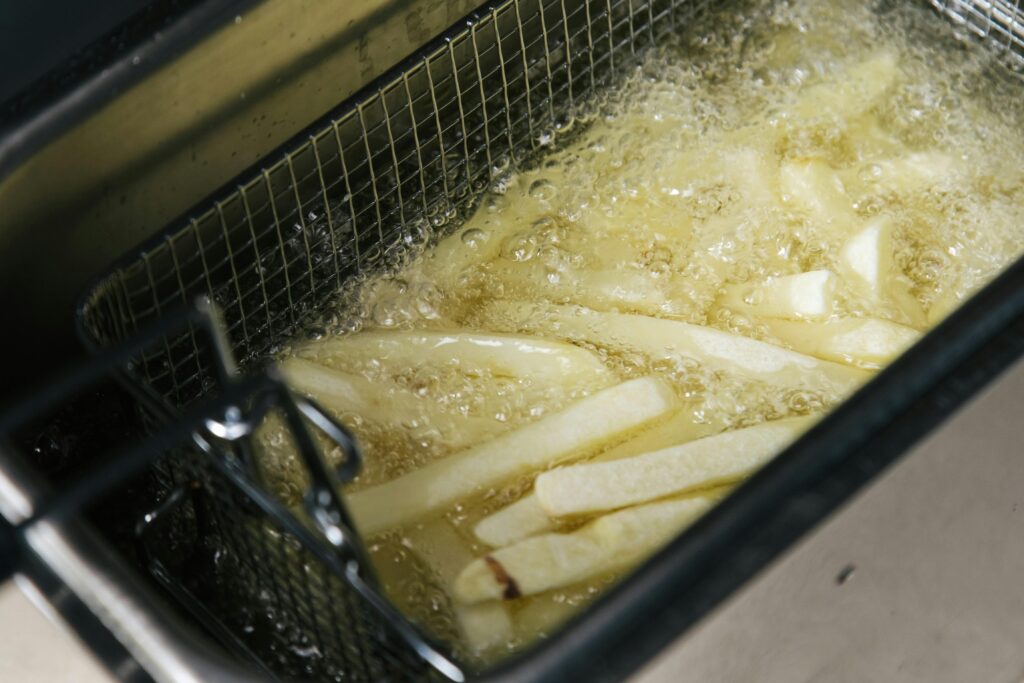
Crispy fries. Golden chicken. Crunchy snacks that feel comforting and indulgent. Frying has always held a special place in home kitchens and restaurants alike. But as more people become mindful of their health, an important question keeps surfacing: is deep frying really worth it, or is air frying the safer choice?
Let’s break it down in simple, practical terms.
What Happens During Deep Frying
Deep frying involves submerging food in very hot oil, often between 350°F and 375°F. At these temperatures, oil undergoes chemical changes. It begins to oxidize, producing harmful compounds such as aldehydes and free radicals. When the same oil is reused multiple times, these toxic byproducts increase even further.
Another concern is the formation of acrylamide, a potentially cancer-causing compound that develops when starchy foods like potatoes are cooked at high temperatures. French fries and potato chips are among the highest contributors.
Deep-fried foods also soak up large amounts of fat. This dramatically raises calorie content and increases intake of unhealthy saturated and trans fats, which are linked to heart disease, obesity, and inflammation.
In short, deep frying delivers flavor and crunch, but it comes with a significant health cost.
How Air Frying Works
Air frying uses rapidly circulating hot air to cook food, creating a crispy exterior with little or no added oil. You still get browning and texture, but without fully immersing food in fat.
Because far less oil is involved, air-fried foods contain substantially fewer calories and less fat. Studies have also shown that air frying can reduce acrylamide formation by up to 90 percent compared to deep frying.
That doesn’t make air-fried food “health food,” but it does make it a much lighter option.
Comparing the Health Impact
Fat and Calories
Deep-fried foods can contain three to five times more fat than air-fried versions. Over time, this difference matters. High-fat diets contribute to weight gain, clogged arteries, and insulin resistance.
Toxic Compounds
Deep frying encourages the creation of oxidation products and acrylamide. Air frying still uses heat, but the absence of large amounts of oil greatly reduces these harmful chemicals.
Nutrient Retention
Air frying tends to preserve more nutrients than deep frying because food isn’t sitting in degrading oil for extended periods.
The Catch with Air Fryers
Air fryers are not a magic shield. If you load them with heavily processed frozen foods or sugary coatings, you’re still eating ultra-processed meals. Also, extremely high temperatures can still create some unwanted compounds.
The real benefit comes when air fryers are used to cook whole, minimally processed foods like fresh vegetables, potatoes, fish, and lean meats.
So, Which Is Safer?
From a health perspective, air frying clearly wins. It significantly lowers fat intake, reduces exposure to toxic compounds, and supports better long-term heart and metabolic health.
That doesn’t mean you must ban deep-fried foods forever. Occasional indulgence is part of life. But for everyday cooking, choosing air frying is a simple upgrade that can make a meaningful difference.
A Healthier Way Forward
Think of air frying as a bridge between comfort and wellness. You still enjoy crispy textures and satisfying flavors, but with far fewer health risks. Pair it with fresh ingredients, good-quality oils used sparingly, and balanced meals.
Your heart, waistline, and future self will thank you.